

Last updated: November 16, 2026.
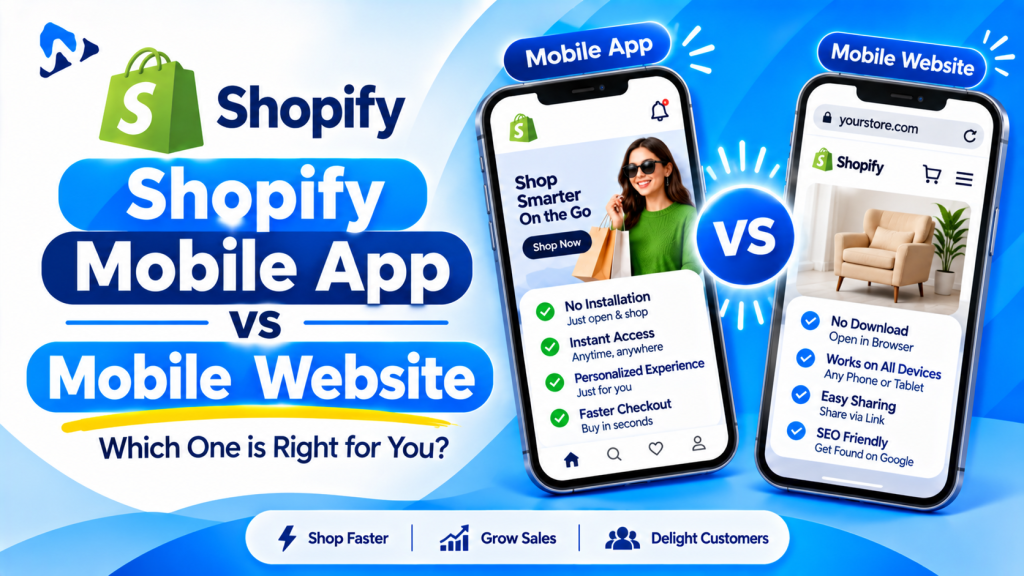
Quick answer: Every Shopify store needs a fast mobile website, because that’s where new shoppers find you through search, ads, social and AI assistants. A mobile app is an extra for customers who already buy from you: it keeps them logged in, puts your store on their home screen, lets you send push notifications and tells you more about how they shop. Build an app once you have steady repeat customers; until then, put your effort into your mobile website.
Key takeaways:
- The mobile website wins new customers.
- The app keeps existing customers coming back.
- Push notifications and saved logins are the app’s biggest advantages.
- Most growing stores end up using both.
In this guide
- Mobile app vs mobile website compared
- Why mobile traffic doesn’t turn into mobile sales
- Do apps really convert better?
- Customer data: app vs website
- When the mobile website is enough
- When a mobile app makes sense
- What about a web app (PWA)?
- Checklist: does your store need an app?
- Your first 90 days with an app
- FAQ
How Does a Shopify Mobile App Compare to a Mobile Website?
| Mobile website | Mobile app | |
|---|---|---|
| How shoppers get it | Opens in any browser, no install | Downloaded from the App Store or Google Play |
| Finding new customers | Strong: Google, ads, social links, AI assistants | Weak: shoppers rarely search app stores for a new brand |
| Bringing customers back | Email, SMS and ads | Push notifications, home screen icon, saved login |
| Checkout | Shopify checkout, with saved details if the shopper uses Shop Pay | Shopify checkout inside the app, with the shopper already logged in |
| Cost | Included in your Shopify plan and theme | A monthly app builder fee, or a custom build |
| Updates | Instant | Instant with most app builders; store review only for big changes |
| Best for | Every store, especially new ones | Stores with loyal, repeat customers |
Why Doesn’t Mobile Traffic Turn Into Mobile Sales?
Most store visits now come from phones, but phones usually convert at a lower rate than desktops. Across ecommerce, about 70% of carts are abandoned, according to Baymard Institute, and small screens make the reasons worse:
- Typing: entering an address and card number on a phone is slow.
- Logins: shoppers forget passwords and give up.
- Distraction: a notification pulls them away and the tab is lost.
- Speed: heavy pages load slowly on mobile data.
A better mobile website fixes much of this: a fast theme, express checkouts such as Shop Pay, Apple Pay and Google Pay, and fewer pop-ups. An app removes the login and lost-tab problems for customers who install it.
Do Apps Really Convert Better Than Mobile Websites?
App users usually convert at a higher rate, but be careful with the big numbers you see. Claims such as “apps convert 3x better” mostly come from app builders, and they compare app users, who are already loyal customers, with all website visitors, including first-time browsers. Loyal customers convert better on any channel. The fair question is whether an app makes your existing customers buy more often. Measure that by comparing repeat purchase rate and orders per customer before and after launch.
Customer Data: App vs Website
| Data | Mobile website | Mobile app |
|---|---|---|
| Who the shopper is | Often anonymous until checkout | Usually logged in |
| Tracking across visits | Limited by browser cookie rules, especially Safari | Same user across sessions |
| Browsing and wishlist history | Partial | Fuller, tied to the customer |
| Reaching them later | Email, SMS, ads | Push notifications, plus email and SMS |
Better data means better recommendations and offers, but only if you ask for consent and keep it secure.
When Is the Mobile Website Enough?
Stick with your mobile website if you’re still finding product-market fit or most customers buy only once.
- You’re getting your first few hundred orders.
- You sell one-off purchases, such as furniture or wedding items.
- Your mobile site is slow or hard to use. Fix that first, since an app won’t help shoppers who never get past the site.
- You don’t have new products, drops or offers to tell customers about each month.
When Does a Mobile App Make Sense?
An app pays off when the same customers buy from you again and again.
- Repeat purchases: beauty, coffee, pet food, supplements, fashion with frequent new arrivals.
- Product drops and limited stock: a push notification reaches fans in seconds.
- Loyalty programs: points, VIP tiers and app-only offers give customers a reason to install.
- A large email and SMS list: you already have people to invite to the app.
- Email costs or deliverability: push notifications don’t depend on the inbox.
See push notifications for Shopify apps and how to set up VIP tiers.
What About a Web App (PWA)?
A progressive web app is a mobile website that can be added to the home screen and work more like an app. It’s cheaper than a full app and needs no app store listing. The trade-off: shoppers rarely add websites to their home screen, and on iPhone, web push notifications only work after the shopper adds the site to the home screen. A native app gets the home screen spot and reliable push notifications as soon as it’s installed.
How Much Does a Shopify Mobile App Cost?
App builders charge a monthly fee that usually covers both iOS and Android; a custom-built app costs far more upfront plus ongoing maintenance. For plans and real prices, see how much a Shopify mobile app costs.
Checklist: Does Your Store Need an App?
Count how many of these are true for your store:
- A good share of your orders come from returning customers.
- You launch new products, drops or offers at least monthly.
- You run, or plan to run, a loyalty or rewards program.
- You have an email or SMS list you can invite to download the app.
- Your mobile website is already fast and easy to use.
4 or 5: an app is likely worth it. 2 or 3: test with a builder on a monthly plan. 0 or 1: focus on your mobile website for now.
Your First 90 Days With an App
- Weeks 1 to 2: launch on iOS and Android, add a download banner for mobile visitors, and email your list with an app-only welcome offer.
- Weeks 3 to 6: send 1 to 3 useful push notifications a week, such as new arrivals, back in stock and abandoned carts. Avoid daily blasts.
- Weeks 7 to 12: compare app customers’ repeat purchase rate and orders per customer with before launch, and keep the messages that drive orders.
Common Mistakes
- Building an app before fixing a slow mobile site.
- Launching without promotion. Customers won’t find the app on their own.
- Too many push notifications. Shoppers turn them off or delete the app.
- No app-only reason to install, such as early access or an exclusive discount.
- Judging it on vendor stats instead of your own repeat purchase data.
Frequently Asked Questions
Is a mobile app better than a mobile website for Shopify?
Neither is better for everything. The mobile website brings in new customers; the app keeps existing customers coming back with push notifications and a saved login.
Does a mobile app convert better than a mobile website?
App users usually convert better, partly because they’re already loyal customers. Judge an app by whether your existing customers buy more often after launch.
Do I still need a mobile website if I have an app?
Yes. New shoppers find you through search, ads and social links, which open your website. The app is for customers who already know you.
Can a small Shopify store have a mobile app?
Yes. App builders let small stores launch iOS and Android apps for a monthly fee without code. It’s worth it once you have repeat customers.
How do I get customers to download my store’s app?
Offer an app-only discount or early access, promote it in emails and on your site, and add a banner for mobile visitors.
Does a mobile app help SEO?
Not directly. Google ranks your website, so keep improving your site even after you launch an app.
Related Reading
- How Much Does a Shopify Mobile App Cost?
- Push Notifications for Shopify Apps
- How to Set Up VIP Tiers on Shopify
Update Log
November 16, 2026: First published with a side-by-side comparison, the mobile conversion gap, a fair look at app conversion claims, customer data, PWAs, cost, a checklist and a 90-day plan.